
Legal updates and opinions
Post Author
News / News
Blackouts, further tariff hikes point to ‘inevitable’ financial distress for SA businesses this year
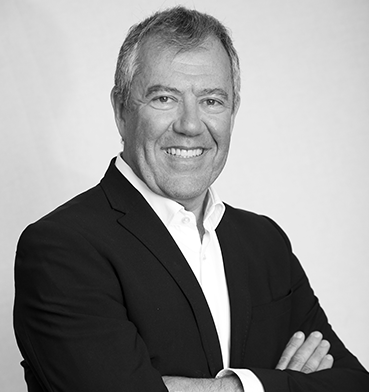
Rolling blackouts and the recently imposed 18.65% Eskom tariff hikes from April this year are likely to place additional stress on the South African consumer and businesses to the extent that further bankruptcies are “inevitable” according to Dr Eric Levenstein, Director and Head of the Insolvency and Business Rescue Practice Group at Werksmans Attorneys.
“With the prospect of higher interest rates, low growth and still high inflation, many companies could face corporate failures particularly in the early part of 2023.
“Insolvency and business rescue practitioners will be kept busy as financial distress continues to have an impact on companies not being able to generate sustainable revenue in continued challenging trading conditions,” said Dr Levenstein.
Recently published statistics by Stats SA for November 2022 (published on 12 December 2022), show that liquidations have increased by 2,1% in the three months ended November 2022, as compared to the three months ended November 2021.
A year-on-year increase of 4,4% was recorded in November 2022.
In November 2022, South Africa saw 166 filings for company and close corporation liquidations.
“We saw 51 filings in the finance, insurance, real estate and business services sectors, followed by 35 filings in the trade, catering and accommodation sectors, followed by 17 in the community, social and personal services sectors. The glimmer of good news is that the total number of liquidations decreased by 3,4% in the first 11 months of 2022, as compared with the first 11 months of 2021,” Dr Levenstein noted.
South Africa is not alone.
Worldwide there is an expectation that Zombie companies – those trading on the cusp of insolvency and where there is no real prospect of a restructuring or rescue – will have no choice but to file for insolvency (bankruptcy).
Said Dr Levenstein:
“In a distressed market, directors of failing companies must continuously and critically evaluate the trading prospects of their businesses and assess whether they continue to be sustainable. “If not, they should possibly consider an early intervention – such as a filing for a rescue process or liquidation. If directors fall short of this obligation, they could potentially open themselves up to personal claims from irate creditors who would seek to recover losses incurred by such creditors that have been trading with what is effectively an insolvent company.”
The Companies Act 2008, frowns upon such behaviour and imposes civil liability for reckless and insolvent trading on such directors.
If directors are uncertain of their obligations, for example whether to file for the company’s business rescue or liquidation, Dr Levenstein advised directors to be ready and willing to take professional advice from the company’s legal advisors and auditors in a timely fashion.
“Leaving it too late makes it far worse. Taking advice at an early stage, allows for business value to be retained. Typically, where professional restructuring and rescue practitioners can get involved, and negotiate a rescue plan for the entity and all stakeholders -creditors, shareholders, employees and suppliers – all face a better outcome than what would be available to them in a liquidation.”
“Liquidation puts to an end the company’s ability to continue trading.”
Dr Levenstein added that there must be a recognition that corporates are living entities and must be maintained operationally and financially.
“If obstacles are thrown in their way, the Companies Act provides solutions and outcomes that can provide failing entities a breathing space to restructure, and potentially be rescued from ultimate failure. Directors must be alive to these options and where positive outcomes can occur with correct and informed decision making” he concluded.
Latest News
And we dare to ask again – whose right is it to enforce a director’s fiduciary duties?
by Tandiwe Matshebela, Director and, Koketso Rapoo, Candidate Attorney The Companies Act It goes without saying that a director is [...]
When is CTC not available as CTC?
What is contributed tax capital? CTC - or to give it its full name, contributed tax capital - is an [...]
Product recalls in South Africa
by Helen Michael, Director and, Raisah Mahomed, Candidate Attorney Product recalls in South Africa and globally have attracted much attention [...]
Section 12A(3)(e) – Is it really all about promoting HDP or worker ownership?
by Graeme Wickins, Director Section 12A(3)(e) of the Competition Act Much has been written about the hyper-focus the Competition Commission [...]
Bid rigging vs price fixing: Clarification on when you will be deemed to have exited a cartel
Understanding what is exactly required to demonstrate that a company has distanced itself from a cartel is undoubtedly of great [...]
When must your medical scheme pay for treatment?
by Helen Michael, Director and, Raisah Mahomed, Candidate Attorney On 26 August 2022, the High Court in Pretoria handed down [...]



