
Legal updates and opinions

News / News
The Gauteng school placements crisis (2026) – Why children are still waiting and what the law says
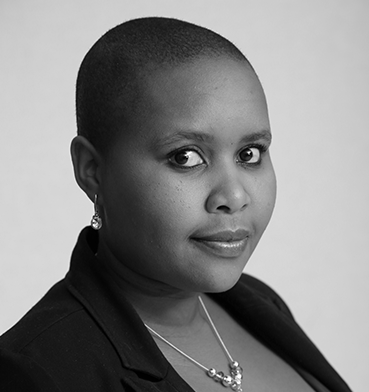
By Naledi Motsiri – Director and Nothando Nyoni – Associate
As the 2026 school year begins, many parents in Gauteng are not celebrating. They are anxious, frustrated, and in some cases, angry, because their children have not yet been placed in schools, especially in Grade 1 and Grade 8. These frustrations are visible on both social and mainstream media, with parents asking why the system cannot accommodate their children.
The parents of affected children report of a variety of issues that led to their children’s non-placement (at either a specific school, or in some instances, any school), such as: applications were submitted late, technical issues prevented the online system from capturing certain applications, children were allocated to schools that are unreasonably far from their home or the parents’ place of work, or their children were placed at a school that the parents never selected. Some parents have stated that they applied timeously but are still waiting for their children to be allocated to a school. Other parents have expressed frustration over their children—who are South African citizens—not being placed at a school in circumstances where foreign and/or undocumented children have been placed at schools. These frustrations have raised difficult questions about fairness, legality, and the State’s obligations.
The Gauteng Department of Education has acknowledged placement delays, attributing them to capacity constraints, rapid population growth, and pressure on schools in densely populated areas. The Department maintains that the majority of learners placed are South African citizens and denies that foreign nationals are prioritised.
In South Africa, the legal position on the right to education is clear. Section 29(1)(a) of the Constitution of the Republic of South Africa, 1996 guarantees everyone the right to a basic education. This right is immediate. It is not subject to progressive realisation, and applies to all children in South Africa, regardless of nationality or immigration status. Additionally, the South African Schools Act No. 84 of 1996 places a duty on provincial education departments to ensure that schools have the necessary capacity to accommodate children, while parents are legally obligated to ensure that their children attend school. The law does not allow schools to exclude children based on documentation status.
Courts have reinforced this. In multiple judgments, South African courts have confirmed that undocumented children may not be denied access to basic education. Policies requiring birth certificates or permits as conditions for admission have been struck down as unconstitutional, because they undermine a child’s right to education.
These judgments do not create special privileges for foreign children. They confirm the simple principle that children must not be punished for their parents’ immigration status or for administrative failures such as unregistered births.
The legal position is settled. The reality, however, is more complicated. Schools are under severe pressure. Popular schools reach capacity quickly. Infrastructure has not kept up with population growth and administrative backlogs delay placements. In this environment, perceptions of unfairness are easy to form, especially when parents receive little communication and no clear timelines. Weeks into the school year, frustration is understandable.
The issue of children’s non-placement at schools is not about citizens versus non-citizens. It is about a system under strain, failing the very children it exists to serve. The Constitution guarantees every child the right to a basic education. Parents demand answers and children cannot wait. Blame will not solve this crisis—clear governmental planning, accountable administration, and urgent investment will. The law gives every child a right to learn, but that right is meaningless if the system cannot put them in a classroom. Gauteng cannot afford more delays. Every child deserves a seat, every parent deserves clarity, and the State must deliver. Not next week or next month, but immediately.
Latest News
POPIA: misconceptions, Whatsapp groups and other deceptions!
by Ahmore Burger-Smidt, Director and Head of Data Privacy and Cybercrime Practice and member of Competition Law Practice; and Nyiko [...]
The Information Regulator – Both a POPIA And PAIA Regulator, Extension granted for PAIA manuals to be available
by Ahmore Burger-Smidt, Director and Head of Data Privacy and Cybercrime Practice and member of Competition Law Practice; and Dale [...]
Don’t let rumours deceive you, POPIA is still coming into effect on 1 July 2021 – No extension or grace!
POPIA is still coming into effect on 1 July 2021 "We have already said that on the 1st of July [...]
AFRICRYPT – yet another South African crypto asset scam
Crypto asset scam Many South Africans will recall the infamous MTI[1] crypto asset scam that caught the attention of [...]
Vaccination Policies for the Workplace
Vaccination Policies The Department of Employment and Labour recently released an Amended Consolidated Direction on Occupational Health and Safety measures [...]
Amended Consolidated Direction on Occupational Health and Safety Measures
Occupational Health and Safety Measures On 11 June 2021 the Minister of Employment and Labour published an Amended Consolidated Direction [...]



